Everyday Tasks Requiring Near Vision Accuracy
Near vision lets you see details clearly when objects sit close to your eyes. The near point marks the closest spot where your eyes can still focus sharply without blur. Many people notice changes in this ability as they grow older, yet few stop to think how often they rely on it. This skill affects productivity at school, in offices, and during screen time. In this guide you will find a full list of several activities during which the near point is important. You will also learn the science behind it, ways poor near vision creates problems, and steps you can take to protect your eyes for better daily performance.
Understanding Near Point in Human Vision
The near point is the shortest distance at which your eyes can form a clear image on the retina. For most young adults this distance sits around 10 to 25 centimeters from the face. The eye achieves this through a process called accommodation. Tiny muscles inside the eye tighten and change the shape of the natural lens to bend light correctly for close objects.
As people reach their forties, the lens grows less flexible. This normal change, known as presbyopia, pushes the near point farther away. Reading material must then be held at arm’s length to stay in focus. Students and office workers feel the effects first because they spend long hours on close tasks. When the near point moves back, fine details become harder to see and concentration drops. Understanding this basic fact helps explain why some everyday actions suddenly feel more tiring.
Scientific Basis of Near Vision Performance
The eye lens starts round and soft in youth so it can thicken quickly for near focus. Light rays from a close object spread out widely and the lens must curve more to bring them together on the retina. This adjustment happens automatically when the brain signals the ciliary muscles.
Prolonged near work keeps these muscles under constant tension. Over time the eyes tire and the ability to switch focus weakens. Research in optometry shows that hours spent staring at screens or paper reduces blink rate and leads to dry eyes. Clinical findings link this strain to headaches and blurred vision at the end of the day. The focal length shortens during near tasks, placing extra demand on the visual system. When the system cannot keep up, clarity suffers and errors increase in detail-oriented jobs.
List Several Activities During Which the Near Point Is Important
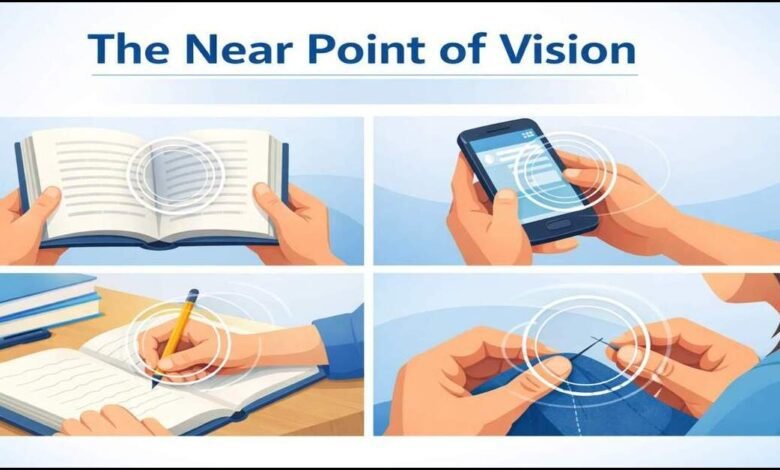
Many common tasks depend on strong near vision. Here is a practical list of several activities during which the near point is important. Each one requires the eyes to maintain sharp focus at close range for extended periods.
Reading Printed Text
Books, newspapers, and study notes all sit within the near point range. Clear vision at this distance supports steady reading speed and good comprehension. When letters stay sharp, the brain processes words faster and remembers details better. Students reviewing textbooks or professionals checking reports rely on this ability hour after hour. If the near point recedes, readers hold pages farther away, which slows them down and raises fatigue. Proper lighting and correct distance help keep text easy to follow and protect concentration throughout long study sessions.
Using Smartphones and Tablets
Phone screens and tablets usually rest 30 to 40 centimeters from the eyes, right in the working near range. Typing messages, scrolling feeds, or reading articles demands constant fine focus. Small text and bright displays add extra strain because the eyes must adjust quickly between content and surroundings. Many users notice dryness or discomfort after extended use. The near point plays a key role here because any shift in focus ability turns simple browsing into a tiring effort. Keeping screens at a comfortable distance and adjusting brightness reduces the load on accommodation muscles.
Writing and Note-Taking
Handwriting in notebooks or filling forms requires the eyes to track the pen tip at close range. Alignment of letters and spacing depend on accurate near vision. Students copying lecture notes or office workers completing paperwork notice mistakes when focus starts to blur. The near point must stay stable so the hand and eye coordinate smoothly. Poor near vision leads to cramped writing or skipped lines. Good posture and sufficient light make this activity easier and help maintain neat, accurate records without extra effort.
Computer and Laptop Work
Coding, data entry, spreadsheet analysis, and financial modeling all happen at arm’s length from the screen. The near point determines how clearly you see small fonts, numbers, and symbols. Office professionals spend most of their day in this zone, switching between keyboard and monitor. When near vision weakens, errors creep into calculations and reading speed drops. Proper monitor height and distance keep the eyes within their comfortable range and limit strain during long work hours.
Sewing, Crafting, and Fine Manual Work
Threading a needle, knitting, or assembling small jewelry pieces demands precision at very close distances. The near point must allow sharp detail so fingers can place stitches or parts exactly where needed. Crafters and tailors work for hours on these tasks. Any loss of near focus causes frustration and slower output. Good lighting and magnifying tools can help, yet the basic ability to see fine threads or beads still rests on healthy accommodation. Maintaining this skill supports both quality and enjoyment in hands-on hobbies.
Drawing, Designing, and Artistic Work
Artists and graphic designers examine lines, colors, and tiny details up close while creating sketches or digital layouts. The near point affects how accurately they see proportions and shading. A slight blur can change the entire look of a piece. Creative work often continues late into the night, which adds fatigue to already demanding visual tasks. When near vision stays strong, artists produce cleaner lines and notice subtle mistakes before they become permanent. This accuracy saves time during revisions and improves final results.
Laboratory and Scientific Work
Scientists, technicians, and healthcare staff peer through microscopes or read measurement scales at close range. Pipettes, test tubes, and fine instruments require steady near focus to avoid errors in experiments or patient samples. The near point is critical because even small mistakes can affect research outcomes or medical decisions. Lab work often involves hours of concentrated viewing, so eye comfort directly influences safety and reliability. Clear vision at this distance supports careful observation and precise documentation.
Driving Dashboard Monitoring
While driving mainly uses distance vision, checking the speedometer, fuel gauge, navigation screen, or phone mount happens at near to intermediate range. Quick glances inside the car must stay sharp for safe reading of numbers and icons. The near point helps drivers switch focus rapidly between the road and controls without losing clarity. Older drivers or those with changing vision sometimes hold their heads at awkward angles to read displays. This habit increases neck strain and distraction risk. Keeping near vision in good condition supports smoother transitions and better overall safety.
Impact of Poor Near Point on Daily Performance
When the near point moves farther away, productivity suffers in many areas. Students take longer to finish assignments and understand less of what they read. Office workers make more typing or calculation mistakes, which leads to extra review time. Detail-oriented tasks become frustrating and time-consuming.
Eye fatigue builds quickly and often brings headaches or sore shoulders from poor posture. These discomforts reduce focus and lower overall efficiency. In some cases people avoid certain activities altogether, which limits learning or creative output. From an economic view, companies notice slower task completion and higher error rates when employees struggle with near vision. Simple daily actions start to feel harder, which affects confidence and well-being at home and at work.
Factors Affecting Near Vision Efficiency
Age stands as the main factor because the lens naturally stiffens over time. Screen exposure adds another layer because constant close focus tires the accommodation system faster. Digital habits like small text sizes or low screen brightness force the eyes to work harder.
Lighting conditions matter too. Dim rooms make the pupils widen and reduce depth of focus. Bright glare creates contrast problems that strain muscles. Nutrition and general health play supporting roles. Good blood flow and hydration keep eye tissues healthy, while conditions like diabetes can speed up vision changes. Taking all these elements into account helps people spot the reasons behind sudden near vision difficulties.
Practical Strategies to Improve Near Vision
Set a proper reading distance of about 35 to 40 centimeters and sit with a straight back. This position reduces neck and eye strain at the same time. Follow the 20-20-20 rule: every 20 minutes look at something 20 feet away for at least 20 seconds. This short break lets the focusing muscles relax and recover.
Use corrective lenses exactly as prescribed. Regular eye exams catch changes early so you get the right strength at the right time. Adjust your workspace with screens at eye level or slightly below and ensure even room lighting. These small changes add up to noticeable comfort during long near tasks and help preserve natural accommodation longer.
Tools and Technologies Supporting Near Vision
Reading glasses or bifocals bring close objects back into sharp focus for those whose near point has receded. Blue light filter lenses or screen settings cut glare and make digital content easier on the eyes. Some people benefit from task-specific magnifiers for sewing or detailed crafts.
Ergonomic stands hold books or tablets at the ideal angle and distance. Emerging options include apps that remind you to take vision breaks or adjust screen color temperature automatically. These tools do not replace healthy habits but they make daily near vision tasks more comfortable and productive when used together with good practices.
Expert Insights and Real-World Applications
Optometrists observe that people in detail-heavy jobs notice presbyopia symptoms earlier than others. A student who reads for hours may first complain of blur around age 42, while someone with less near work might not feel changes until later. Office workers often report afternoon headaches that ease after they update their prescription or improve lighting.
One common case involves a graphic designer who switched to larger monitor fonts and took regular breaks. Her output quality rose and eye discomfort dropped within weeks. Another example comes from laboratory staff who added adjustable microscope eyepieces and better task lamps. Error rates fell and they finished shifts with more energy. These real situations show that small adjustments guided by professional advice can restore comfort and performance in near vision activities.
FAQs
Why is near vision important in daily life?
Near vision supports clear sight for reading, writing, phone use, and many precision tasks. It directly affects speed, accuracy, and comfort in school, work, and hobbies. When this ability works well, people finish tasks faster and with fewer mistakes.
What happens when the near point increases with age?
The lens loses flexibility and cannot curve enough for close focus. This condition, called presbyopia, makes the near point move farther away. Reading and other close activities become blurry unless you hold material at a greater distance or use correction.
How can I test my near vision at home?
Hold a book or phone at normal reading distance with one eye covered. Check if text stays sharp. Try moving the material slowly closer until it starts to blur, then measure that distance. Compare both eyes and repeat every few months to notice changes. For a more structured check, print a standard near vision card and follow the distance instructions on it.
Which professions rely heavily on near vision?
Accountants, data entry clerks, graphic designers, researchers, jewelers, tailors, laboratory technicians, and software developers all spend long hours on close detailed work. Their success depends on maintaining clear focus at short distances throughout the workday.
Conclusion
A strong near point keeps daily tasks clear and comfortable. From reading and phone use to crafting and lab work, many activities depend on accurate close vision. Understanding how the eye focuses and what affects it helps you spot problems early. Simple habits like the 20-20-20 rule, good ergonomics, and timely eye exams make a real difference in how long you stay productive and strain-free.
Take time to check your workspace, update prescriptions when needed, and give your eyes regular breaks. These steps protect your vision and support better performance in everything you do. Schedule routine eye care so you can continue enjoying books, screens, creative projects, and precise manual tasks with confidence for years to come. Small actions today lead to clearer sight and easier days tomorrow.
Also read: Ponas Robotas Meaning and Guide: What It Is in Tech